 Retro
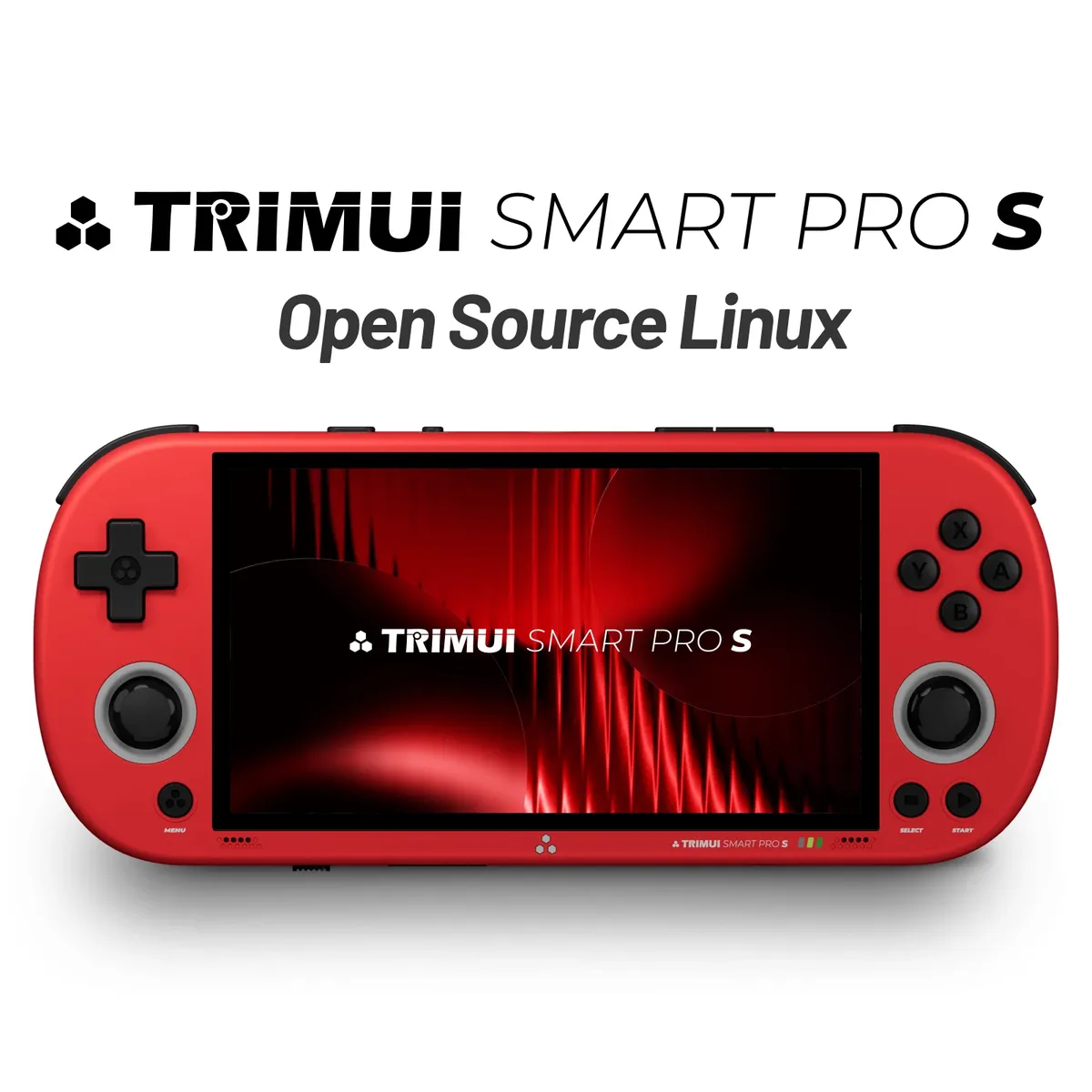

The short answer: get the Smart Pro S if you want PSP, Dreamcast and N64 to run well, because that is what the extra money buys, along with a cooling fan and a better D-pad. Get the original Smart Pro if you mostly play PS1 and older, since it does all of that on the same big screen for less.
The Smart Pro S is not a fresh idea, and TrimUI would happily tell you so. It takes the Smart Pro that people already liked, keeps the same big screen and the same body, and swaps the engine underneath for something with a lot more to give. That makes the question a simple one. You are not really choosing between two different handhelds, you are deciding whether the newer chip, and the fixes that came with it, are worth paying more for. Here is the honest version of that decision, once the marketing has settled down.
What the S actually changes
The headline is the chip. The original Smart Pro runs an Allwinner A133P, a modest four-core part that was always the sensible but limited heart of a budget machine. The Smart Pro S replaces it with the eight-core Allwinner A523, and that is a genuine jump rather than a spec-sheet boast. More cores, a higher clock and a stronger GPU add up to roughly double the graphics grunt, and you feel it in exactly the places the old one used to sweat.
Three other changes matter more than the marketing lets on. There is now a proper cooling fan, which quietly cures the original's habit of running hot. The D-pad has been redesigned, and anyone who owned the first one will know why that is a big deal, because the old cross was the device's weakest point by a distance. The sticks are now clickable, taller and grippier, and there is a touchscreen on top for menus and the odd DS game.
Just as worth saying is what did not change. The screen is the same lovely 4.96-inch 720p panel, the battery is the same 5000mAh, and the memory is still 1GB on both. That last one is the real ceiling, and no new chip gets around it. Neither model has video out either, so this was never going to be a telly machine.
What that buys you in games
Spec talk is cheap, so here is where the extra power actually lands. In honest practice the original Smart Pro is a PlayStation 1 and below machine. Everything up to and including PS1 looks and runs beautifully on that big screen, and that covers a genuinely enormous slice of gaming history. Push past it and things wobble. N64 and Dreamcast are hit and miss, and PSP asks more than the old chip can reliably give.
The Smart Pro S is where that ceiling lifts. N64 and Dreamcast become properly playable rather than a gamble, and most of the PSP library runs genuinely well, which is the single best reason to pick it. The heaviest PSP games still push it too far, and Saturn stays awkward, so it is not a miracle worker. But going from PS1 and below up to PSP, Dreamcast and N64 is a large and real change in what you will sit down and play.
One honest limit applies to both, so nobody is caught out. Neither handles PS2, GameCube or Wii at playable speeds, and that 1GB of RAM is the reason. If those are what you are after, you want an Android or x86 handheld, because no TrimUI in this line will get you there.
So which should you buy?
Buy the Smart Pro S if you actually want PSP, Dreamcast and N64 to run well, because that is precisely what the extra money buys. It is also the easy pick if you liked the look of the original but were put off by its poor D-pad and its tendency to get hot, since both are sorted here. At its intended price it is the stronger machine, and most people asking this question will be happier with it.
Stick with the original Smart Pro, or simply spend less, if your library lives in the 8-bit through PS1 range. It handles all of that beautifully for often the better part of half the price, and the headroom on the S is money spent on games you might never load. The old D-pad and the heat are the trade you make, so go in with your eyes open.
Whichever you choose, put a few pounds towards a decent microSD from a name you trust rather than the bundled card, and plan to install custom firmware like Knulli or NextUI. The stock software on both is fine at best, and a good card image is what turns either of these from a fiddly project into the thing you happily play of an evening. One last caution on the S. If a listing has crept up towards Android-handheld money, its value case starts to wobble, because near that price you can have PS2 and GameCube instead.
For most buyers weighing these two, the Smart Pro S is worth the step up, and it usually is not much dearer than the original once the sales settle down. But if the first Smart Pro is genuinely half the money on the day, and PS1 is as far as you need to go, the older one is still a lovely buy. Let the live prices below decide it, and our best value ranking weighs that same trade, power against price, across everything we track.